Key Takeaways
- Not all Roanoke neighborhoods perform equally. Demand, schools, and access drive investment quality.
- Location outweighs price. Proximity to jobs, retail, and transit improves tenant quality and occupancy.
- Cash flow + appreciation both matter. Strong investments balance monthly returns with long-term growth.
- Roanoke is a growth market. DFW expansion continues to support rental demand and value appreciation.
ROANOKE TX · INVESTOR GUIDE
Roanoke is small enough that the right street matters as much as the right city. Here’s how its micro-markets actually compare for rental investors — grounded in closed MLS data, not generalities.
| MEDIAN BUY-IN | BEST YIELD | SOLD AT/ABOVE ASK | MEDIAN SALE DOM |
| $580,000 | 7.4% | 12% | 36 days |
| Closed sale, 90-day | 3BR segment | Buyer’s leverage | Time on market |
Source: closed Roanoke 76262 MLS sale and lease transactions, trailing 90 days.
START HERE
Why Roanoke rewards investors who know the streets
Most “best neighborhoods” articles are written for cities big enough to have dozens of distinct districts. Roanoke is not that city — it is a compact community of a few square miles inside the 76262 ZIP. But that is exactly why local knowledge pays here. In a small market, the difference between two homes a mile apart can swing both rent and resale by a wide margin, and the broad averages that work fine in a sprawling suburb routinely mislead. The investor who understands Roanoke’s internal geography has a real edge over one who treats the whole ZIP as interchangeable.
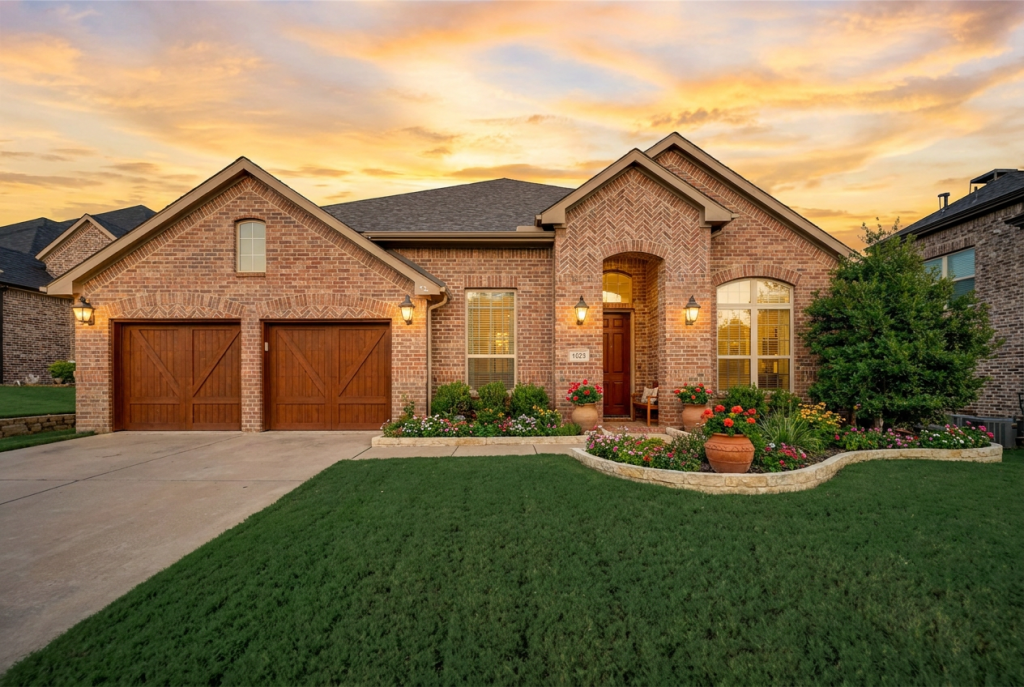
Roanoke’s appeal as a rental market rests on a foundation outside investing too: its position five miles from Fort Worth Alliance Airport and the AllianceTexas logistics hub, direct access via State Highway 114 and Interstate 35W, and a population that has more than tripled since 2000. That growth feeds three distinct tenant pipelines — workforce households tied to Alliance distribution, executive relocations linked to corporate aviation and nearby Westlake employers, and renter-by-choice professionals who want a single-family home without a $580,000 purchase. The best neighborhood for you depends largely on which of those tenants you want to serve.
There’s no single “best” Roanoke neighborhood — there’s a best one for your strategy.
Yield-focused investors, stability-focused investors, and low-maintenance investors should each be looking at a different part of Roanoke. The sections below map the city’s micro-markets to the strategy each one serves best, so you can match the area to your goals rather than chasing a generic ranking.
THE FOUR MICRO-MARKETS
Roanoke’s rental areas, compared
| ROANOKE MICRO-MARKET | TYPICAL BUY-IN | BEST FOR | TENANT PROFILE |
| Downtown / Oak St Corridor | ~$400k | Yield + velocity | Walkability renters |
| Alliance-adjacent / Litsey Creek | $400k-$600k | Steady demand | Workforce |
| Master-planned subdivisions | ~$635k | Stability | Executive / family |
| New-construction (2015+) | ~727k | Low capex | Relocation |
Typical buy-in reflects closed sale medians by segment and vintage; categories overlap geographically. Source: Roanoke 76262 MLS, trailing 90 days.
1. Downtown & the Oak Street corridor — yield and velocity
The original Roanoke street grid feeding into Oak Street is the heart of the city’s identity. Oak Street is the dining strip that earned Roanoke its regional billing as the “Unique Dining Capital of Texas,” and homes within walking distance of it carry a genuine premium. This is where the bulk of the pre-2000 housing stock sits: smaller footprints, often under 1,500 square feet, that sold at a roughly $400,000 median.
For investors, this area is the yield play. Smaller homes near downtown command the highest rent per square foot in Roanoke — around $2.00 in the compact segment — and the 3-bedroom homes that dominate here lease fastest, in roughly 36 days. The trade-off is condition: older homes carry higher capital-expenditure risk, so budget for it. But for an investor chasing the strongest gross yield, this is the corner of Roanoke to study first.
- Best for: yield-focused investors comfortable with some renovation
- Watch for: deferred maintenance and dated systems in older stock
2. The Alliance-adjacent corridor & Litsey Creek — steady workforce demand
Roanoke’s southern edge sits roughly a mile from the Alliance Global Logistics Hub. This corridor is defined by its proximity to the region’s largest employment engine — and by the institutional capital that has noticed. Litsey Creek Cottages, a 396-home single-family build-to-rent community backed by institutional investment, set the amenity and management standard here.
For an independent investor, that institutional presence is a double-edged sword. On one hand, it validates the corridor’s rental demand: these tenants are workforce households with stable logistics-sector income, exactly the renters who keep occupancy steady. On the other, you compete directly against professionally managed product with full amenities. Winning here is about marketing and management quality, not just price — which is precisely where having a professional manager rather than self-managing changes the outcome.
- Best for: investors who want steady, lower-volatility workforce demand
- Watch for: direct competition with amenitized build-to-rent communities
3. Master-planned subdivisions — stability and the executive tenant
The majority of Roanoke’s modern single-family rental stock sits in the planned subdivisions built during the city’s high-growth 2000s and 2010s. These are the 4-bedroom, roughly 3,000-square-foot homes that anchor the market: a $635,000 median sale price against a $3,300 median rent.
This is the stability play. Larger homes in these neighborhoods draw executive-relocation tenants tied to Alliance Airport’s corporate aviation and the Westlake employment cluster — renters who tend to sign longer, renew at higher rates, and absorb rent increases without much negotiation. The gross yield is lower than the downtown 3-bedroom segment at roughly 6.2%, but the income is more durable and the tenant turnover lower. For an investor who values predictability over maximum yield, this is Roanoke’s core.
- Best for: investors prioritizing stable, long-tenure executive renters
- Watch for: higher capital base and longer lease-up (about 56 days for 4-bedroom homes)
4. New construction (2015 and newer) — low maintenance, premium buy-in
Roanoke’s newest homes — those built since 2015 — sold at a $727,500 median on roughly 2,990 square feet, or about $241 per square foot. That is actually less per foot than the older downtown stock, but the higher absolute price means a larger check at closing.

The appeal here is simple: low maintenance risk. A newer home means fewer surprise capital expenditures, modern finishes that compete cleanly against build-to-rent product, and tenants — often relocations — who expect contemporary quality. The yield is more modest, but for an investor who wants a hands-off hold with minimal near-term capex, paying up for newer construction can be the rational choice.
- Best for: hands-off investors minimizing maintenance and capex risk
- Watch for: premium entry price compressing yield
THE DETAIL THAT SURPRISES BUYERS
Old vs. new: the price-per-foot quirk every Roanoke investor should know
One pattern in the Roanoke data catches nearly every out-of-area investor off guard. You would expect newer, larger homes to cost more per square foot. In Roanoke, the opposite is true:
| COHORT | PRE-2000 HOMES | 2015+ HOMES |
| Median sale price | $400,000 | $727,500 |
| Median size | ~1,448 sq ft | ~2,990 sq ft |
| Price per sq ft | ~$272 | ~$241 |
| What you trade | Higher capex, location | Higher buy-in, low capex |
Source: closed Roanoke 76262 sale transactions by build era, trailing 90 days.
The older, smaller homes near the town center cost more per square foot — about $272 versus $241 for the newer stock. That premium is the market pricing in location: walkability to Oak Street, established tree-lined streets, and the character that newer subdivisions cannot replicate. For an investor, the lesson is that a casual price-per-foot comparison will steer you wrong. The older home is not overpriced; it is carrying a location premium that also supports stronger rent-per-foot. Underwrite each cohort on its own terms.
WHEN TO BUY AND LEASE
Reading the current market window
Beyond location, two timing signals matter for Roanoke investors right now. First, the for-sale market currently favors buyers: only 12% of homes sold at or above asking over the trailing 90 days, and the typical seller gave back about 3% — roughly $25,000 — from the original list price. With 29 homes actively listed at a $725,000 median ask, there is inventory and there is room to negotiate.
Second, the leasing calendar rewards planning. Roanoke’s rental demand concentrates between March and July as families move around the Northwest ISD school calendar. An investor who buys in the softer winter market and has the home leased into the spring peak captures both the better purchase price and the stronger leasing window — a combination worth structuring your timeline around.
Soft sale market, strong rental demand — a favorable setup for buyers.
It is not often that an investor gets negotiating leverage on the purchase and absorptive rental demand at the same time. Roanoke currently offers both: sellers are giving ground while tenants are still committing within about six weeks. For investors who have been waiting for an entry point, the current alignment is worth a close look.
Ready to talk through your Roanoke property?
Tell us the address. We’Il send back a benchmarked rent estimate, projected lease-up timeline, and a side-by-side against active 76262 comps. Free, no obligation. Call (817) 491-2553.
Get a Free Rental AnalysisCOMMON QUESTIONS
Roanoke investment FAQ
What is the best neighborhood for rental investment in Roanoke, TX?
It depends on your strategy. For the strongest yield, the smaller homes near downtown and the Oak Street corridor lead — they rent at the highest price per square foot and lease fastest. For stability, the master-planned subdivisions with their executive-tenant base are the core. For low maintenance, newer 2015-and-later construction minimizes capital expenditure. There is no single best area, only the best one for your goals.
What kind of return can I expect on a Roanoke rental?
Based on trailing-90-day medians, gross yields run roughly 5.2% on 2-bedroom homes, 7.4% on 3-bedroom homes, and 6.2% on 4-bedroom homes. These are gross figures before vacancy, taxes, insurance, capital expenditure, and management. The 3-bedroom segment currently offers the strongest yield and the fastest lease-up.
Is now a good time to buy an investment property in Roanoke?
Conditions currently favor buyers on the purchase side. Only about 12% of homes sold at or above asking over the past 90 days, and the typical seller reduced their price by roughly 3%. Meanwhile rental demand remains strong, with a 44-day median lease-up. That combination of buyer leverage and absorptive demand is a favorable setup.
Why do older homes in Roanoke cost more per square foot than newer ones?
Because the market is pricing in location. Older homes near the Oak Street corridor sold at about $272 per square foot versus roughly $241 for newer 2015-and-later construction. The premium reflects walkability to downtown dining, established neighborhoods, and character that newer subdivisions can’t replicate — and it supports stronger rent per square foot as well.
How does build-to-rent competition affect independent investors in Roanoke?
Communities like the 396-home Litsey Creek Cottages near the Alliance hub have raised the bar for amenities and professional management in the corridor. For independent investors, this validates rental demand but means you compete on marketing and management quality, not just price. Professional management rather than self-managing is often what closes that gap.
What tenant types should I expect in Roanoke?
Three main profiles: workforce households tied to the Alliance logistics corridor, executive-relocation tenants connected to corporate aviation and Westlake-area employers, and renter-by-choice professionals who want a single-family home without buying. Different neighborhoods attract different mixes, which is why matching your property to a tenant profile matters.
Ready to talk through your Roanoke property?
Tell us the address. We’Il send back a benchmarked rent estimate, projected lease-up timeline, and a side-by-side against active 76262 comps. Free, no obligation. Call (817) 491-2553.
Get a Free Rental AnalysisMcCaw Property Management is a licensed Texas real estate brokerage based in Keller, TX, managing single-family rentals across the Dallas-Fort Worth metroplex, including Roanoke and the 76262 ZIP. All figures reflect closed MLS transactions over the trailing 90 days and will shift as the market moves. This guide is informational and does not constitute investment, legal, or tax advice; consult appropriate professionals before investing.
McCaw Property Management · 1670 Keller Parkway, Suite 100, Keller, TX 76248 · (817) 491-2553 · office@mccawpm.com
Author
Kyle McCaw is the founder and broker of McCaw Property Management and a Texas licensed real estate broker (License #0562767). He has been investing in and managing single-family rentals across the Dallas–Fort Worth metroplex since 2003, and personally owns a portfolio of single-family rental homes — so the strategy on this page comes from an owner who underwrites the same deals our clients do.
Kyle is an active member of the National Association of Residential Property Managers (NARPM) and has spoken at several national conferences across the single-family rental management and investing industries. McCaw Property Management is rated the #1 property management company in the Roanoke / DFW Metroplex by PropertyManagement.com and has been named to Texas A&M University’s Aggie 100 list of fastest-growing Aggie-owned businesses five times.